
ULC-Listed Alarm, Fire Panel & Elevator Monitoring in Nova Scotia
ULC-listed monitoring for commercial intrusion alarms, fire panels and elevators across Atlantic Canada.
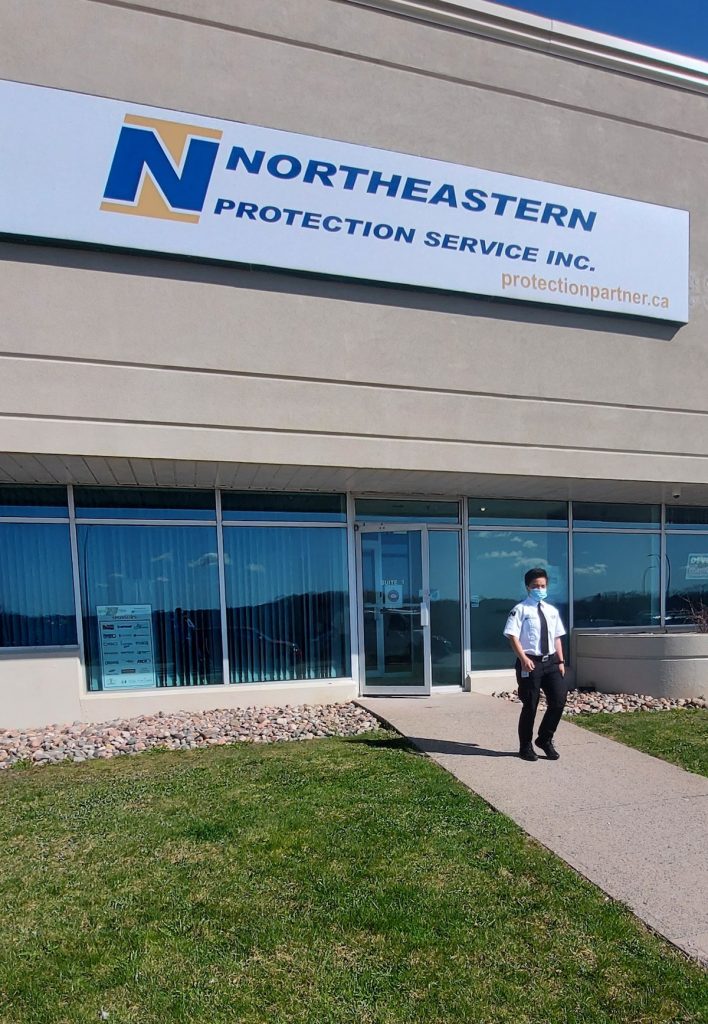
Monitoring is the part of your security system you never see — until 3 a.m. when it’s the only part that matters. Northeastern provides ULC-listed monitoring for commercial intrusion alarms, fire alarm panels and elevators across Nova Scotia, New Brunswick and PEI, with something few monitoring providers offer: our own mobile response units who physically attend your site. [CONFIRM: monitoring delivery model — own ULC station vs. partner station under Northeastern service agreement]
What “ULC-Listed” Means and Why Insurers Ask
ULC (Underwriters Laboratories of Canada) listing certifies that monitoring facilities, transmission paths and procedures meet audited national standards — redundant power, staffing, response protocols, and supervised communication lines. Many commercial insurance policies and fire codes specifically require ULC-listed monitoring; a bargain non-listed service can void the discount or the coverage. If you’re unsure what your current certificate says, we’ll review it at no charge.
What Actually Happens When Your Alarm Trips

The two minutes after a signal are where monitoring providers differ, so here is the sequence, plainly. The signal reaches the monitoring station in seconds over a supervised path. An operator sees the site, zone and signal type — “rear door, warehouse, burglary” — not just an account number. Verification runs per your instructions: video verification where cameras are integrated, a call to the premises for entry/exit signals, straight to dispatch for hold-up, fire or verified events. Then the response chain executes in the order you set: police or fire dispatch, Northeastern mobile response attending the site, and your call list. Every step is logged and timestamped, and you can request the event history — useful for insurers and for finding out whether your current provider actually did what they sold you. When our own mobile unit attends, you get a written report of what was found and what was done, not a voicemail. [CONFIRM: description matches the station’s actual workflow]
Your Call List Is a Security Decision
The call list looks like paperwork and behaves like a policy, and most are written once and never revisited. A few things worth deciding deliberately:
Order and reachability. The list should run in the order you actually want people woken, and every entry needs a number that gets answered at 3 a.m. — a desk line on a call list is a dead end. Two contacts is a minimum; one contact means a vacation is a coverage gap.
Authority, not just availability. The person reached needs authority to make a decision — to authorize a locksmith, approve a mobile unit staying on site, or say “leave it until morning.” A keyholder who must phone someone else costs you the response window.
Who attends, honestly. Sending an employee to check a possible break-in at 3 a.m. is a liability decision as much as a security one. Many organizations decide, correctly, that no staff member attends alone at night — which is precisely what mobile response exists for, with trained officers and a documented report.
Keep it current. Departed staff on call lists is one of the most common problems we find during takeovers, along with numbers that have been out of service for years. Review it annually, and whenever someone on it leaves.
What We Monitor
- Intrusion alarms — burglary, panic and hold-up signals, with customer-defined call lists and dispatch.
- Fire alarm panels — 24/7 supervision of commercial fire panels with immediate fire department dispatch, meeting insurer and code requirements. [CONFIRM: jurisdictions/scope where fire monitoring is offered]
- Elevators — emergency phone line monitoring so a trapped passenger always reaches a live operator.
- System supervision — line-cut, power-loss and low-battery signals, so a failing system gets fixed before it fails you.
Fire Panel Monitoring: Code, Insurers and Plain Duty
Fire monitoring is a different obligation than burglary. For many commercial occupancies, the fire code and your occupancy permit require the fire alarm panel to be monitored so the fire department is dispatched without a human deciding to call — and insurers increasingly make ULC-listed fire monitoring a policy condition rather than a discount. The details that matter operationally: supervisory signals (a closed sprinkler valve, a trouble on a pull station circuit) are monitored alongside alarms, because a fire system quietly out of service is the real nightmare scenario; monthly and annual test signals are logged for your inspection records; and when your sprinkler contractor tests the system, monitoring is placed on test so the fire department doesn’t roll on a drill. If you’re not certain your current fire monitoring is ULC-listed — or whether your certificate is current — that’s the free review we keep offering, because the answer is wrong more often than owners expect. [CONFIRM: scope/AHJ wording]
Questions Worth Asking Any Monitoring Provider
Monitoring is bought on price more often than any other security service, largely because the differences are invisible until the night they matter. If you’re comparing providers — including us — these questions separate them:
Is the station ULC-listed, and will you provide the current certificate? Is my communication path supervised, and how quickly do you know if it’s cut? What is the average time from signal to operator action, and will you show me the reports? Who physically attends my site, and do I receive a written report afterward? Can I get my own event history on request? What are the contract term, renewal and cancellation provisions in writing?
The last one catches people. Long auto-renewing monitoring agreements are common in this industry, and clients discover the terms when they try to leave. Ask before you sign, with any provider.
If you’re already monitored and can’t answer those questions about your current provider, that’s the free certificate and setup review we offer — no obligation, and we’ll tell you if what you have is fine. [CONFIRM: happy to publish an open offer to review competitors’ monitoring setups]
Two more worth adding to that list, both of which tend to expose how a provider actually operates. First: what happens during a communication failure — will I be told my system has stopped reporting, and how quickly? A monitored system that has been silently offline for three weeks is a bill for nothing. Second: how do you handle test mode? Every sprinkler inspection and alarm test should be placed on test and taken off it afterward, and providers who are casual about that either roll the fire department on a drill or leave a system on test long after the technician has gone home. Both failures are common, and both are entirely preventable.
Monitoring Plus Response
A phone call at 3 a.m. asks you to drive to your own break-in. Northeastern’s difference: our monitoring integrates with our mobile alarm response, so a licensed officer attends, assesses, secures the site, meets police or trades, and files a report you read over morning coffee. For high-risk sites, VisionGuard™ live video monitoring adds real-time eyes and voice-down intervention.
Switching Is Simpler Than You Think
Most commercial panels can be redirected to new monitoring without replacing hardware. We handle the takeover: assess the panel, reprogram communication, test signals with the station, and update your insurer’s certificate. Typical downtime is minutes.
What Monitoring Costs, and What Changes the Price
Monthly monitoring is one of the cheapest line items in commercial security, which is why choosing it on price alone is a false economy. The factors that move the number: what’s monitored (intrusion only, fire panel, elevator phone, video verification), the communication path (IP, cellular, or dual-path — we recommend dual-path for most commercial sites), response add-ons (guard attendance vs. call-list only), and multi-site consolidation, which usually earns a portfolio rate. Beware two industry habits: long auto-renewing terms buried in monitoring agreements, and “free” monitoring bundled into inflated equipment leases. Our agreements say what they cost and what they cover. [CONFIRM: publishable price range and term structure]
Frequently Asked Questions
We already have an alarm — can you just monitor it?
In most cases yes, including systems installed by other companies.
What does commercial monitoring cost per month?
It depends on signals monitored (intrusion / fire / elevator), communication path (IP, cellular, dual) and response options. We’ll quote exactly after a short review of your system. [CONFIRM: publishable starting price]
Is fire panel monitoring mandatory?
For many occupancies, yes — building/fire codes and insurers commonly require monitored fire panels in commercial buildings. Your requirements depend on occupancy and AHJ; we can advise site by site.
What happens during a power or internet outage?
Panels carry battery backup and we recommend cellular or dual-path communication, so monitoring continues when lines don’t.
Can you monitor sites outside Halifax?
Yes — monitoring is location-independent. We monitor systems across Nova Scotia, New Brunswick and PEI, with mobile response available in areas we patrol and call-list/dispatch response everywhere else.
We're on an old phone-line dialer. Does that still work?
Barely, and not for long — copper POTS lines are being retired across Canada, and many panels on phone-line dialers are already failing to communicate reliably. Upgrading the communicator to cellular is a small job that we handle routinely during takeovers.
Who calls the fire department at 3 a.m.?
The station does, immediately and automatically per the dispatch protocol — that’s the point of monitored fire. Your call list is notified in parallel, not instead.
Find out what your current monitoring certificate actually covers — free review.
Call 902-435-1336 or request a monitoring quote.
One accountable provider, from planning to response.
Free, no-obligation consultations across Nova Scotia, New Brunswick and PEI.
Request a Free Consultation