
Identification Systems & Supplies
An effective and proven process of access control is a well planned and well managed site-wide Identification System, or ID System. Northeastern can provide several solutions to meet your needs. If a…
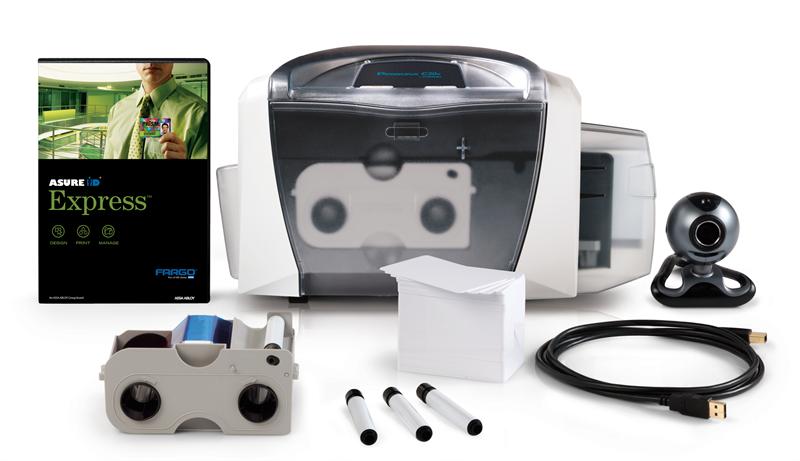
An effective and proven process of access control is a well planned and well managed site-wide Identification System, or ID System.
Northeastern can provide several solutions to meet your needs. If a small number of ID cards are required, Northeastern can produce the cards from our corporate office on an “as-needed” basis. If your needs require a higher volume of cards, Northeastern can provide you with an integrated ID printing system complete with all supplies required to handle your own needs in-house. Our senior managers would be pleased to discuss the options and recommend one that is best suited to your individual needs.
Northeastern carries a COMPLETE range of ID supplies including:
|
|
A number of these supplies can be ordered with your full-color company logo imprinted.


Integration
There is always the opportunity to integrate your ID System with your Access Control system, therefore creating a totally integrated solution. This works by having ID’s directly printed, or adhered to swipe cards which are magnetically encoded or chip-enabled and act as the individual’s “key” to enter the building or facility. Our technical division will be able to integrate these solutions, whether you have an existing access control system, or whether a new system is the solution for you.
Why an ID Program Is a Security Control, Not Stationery
A photo ID program does real security work when it’s designed deliberately. It makes belonging visible — in a building where everyone wears a badge, the person without one is immediately apparent to every employee, which is a security layer no technology provides. It makes access decisions enforceable, since a challenge is easy when the standard is visible and awkward when it isn’t. And where badges double as access credentials, one object controls doors and identifies the holder, so issuing and revoking are a single action rather than two that drift out of sync.
Programs fail in predictable ways: photos so old they’re useless, badges that stay valid after people leave, contractors on permanent badges from a project finished two years ago, and cards so easily forged that nobody trusts them. All four are design and process problems rather than printer problems.
Two Ways to Run It
We produce the cards. For organizations issuing a modest number of cards, we produce them from our corporate office as needed — you send the photo and details, we produce and deliver the card. No equipment, no supplies to stock, no one to train. Best for smaller organizations and steady, low-volume turnover.
You produce them in-house. For higher volumes, or where cards are needed immediately, we supply a complete ID printing system: printer, camera and capture setup, software, and the consumables to run it. We install, configure and train, and we keep supplying ribbons, cards and cleaning kits so you’re never mid-orientation with an empty printer.
Which is right depends less on size than on timing. If a new employee can wait a few days, outsourcing is simpler and cheaper. If they need a badge at 9 a.m. on day one — common in healthcare, hospitality and large industrial sites — in-house wins. Our senior managers will work through the volumes with you rather than defaulting to the larger sale. [CONFIRM: current printer brands and typical volume threshold]
Designing a Badge That Does Its Job
A badge is a small piece of design that carries real operational weight, and most of the decisions are worth making deliberately rather than accepting a template.
What goes on the front. Photograph, full name, organization, and role or department. The photograph should be recent, well lit, and large enough to be useful at conversational distance — a badge photo nobody can match to a face is decoration. Where a badge is checked frequently, colour-coding by role or access level lets staff assess someone in a glance instead of reading.
What goes on the back. Return instructions, a contact number, and any emergency information your organization wants carried. Lost badges come back far more often when they say how.
Expiry and re-issue. Badges that never expire become a security problem years later, when photographs no longer resemble their holders and departed staff still hold valid cards. Building a re-issue cycle into the program — commonly every few years, and immediately on role change — keeps it accurate.
Visual distinction that matters. Employees, contractors and visitors should be distinguishable across a room without close inspection. This is one of the highest-value design choices available, because it turns every employee into a check on unaccompanied strangers.
Durability. Badges live on lanyards, get sat on, and go through washing machines. Card stock, laminate and slot-punch reinforcement determine whether you re-issue once a year per person or once every three, and the cheaper card is frequently the more expensive program.
Running the Program Day to Day
The technology is the easy part. Programs succeed or fail on process, and the failures are consistent enough to list.
Issuing. Someone must own it, and the process must be fast enough that new staff have a badge on day one — a program where badges take a week teaches everyone that badges are optional. Photograph capture, verification of identity, enrolment in the access control system where the badge is also a credential, and a signed acknowledgement of the rules should all happen in a single sitting.
Returning. Badge collection belongs on the departure checklist next to laptop and keys, with a named owner. Where the badge is also an access credential, revoking it in software matters even more than getting the plastic back — you cannot rely on physical return.
Visitors and contractors. Visitor badges should be visually distinct and, ideally, self-expiring — cards that visibly change appearance after a set period, so a badge kept from a previous visit cannot be reused. Contractor badges should be time-limited to the project, not open-ended.
Enforcement, gently. A badge policy that nobody enforces trains staff to ignore badges entirely. The workable standard in most organizations is that everyone wears one visibly, and that an unbadged stranger prompts a friendly question rather than confrontation. That single norm does more practical security work than most technology.
Auditing. Once or twice a year, reconcile issued badges against your staff list. You will find cards issued to people who left, contractors from finished projects, and duplicates. Ten minutes of reconciliation prevents the situation where nobody can say how many valid credentials exist.
When the Badge Is Also the Key
Where the ID card doubles as an access credential, the program stops being an administrative exercise and becomes part of your physical security. Two consequences follow.
First, credential security matters. Older low-frequency proximity formats can be cloned with equipment costing less than the card printer, which means a badge photographed or briefly borrowed can be duplicated. Encrypted, modern credential formats resist this. If your badges open doors, ask what format they use — the answer is frequently older than the building’s most recent renovation. [CONFIRM: formats supplied]
Second, issuing and revoking become a single action with real consequences. Adding someone means granting physical access, and removing them means withdrawing it. That is a significant improvement over managing badges and keys as separate systems, and it is the main reason we recommend combining them — but it does mean the person issuing badges is making access decisions and should know the rules.
For organizations running both, we supply the printing system, the credentials and the access control platform they work with, so the formats match and one vendor is accountable for the whole chain.
Card Types, Security Features and Supplies
Basic photo ID. Name, photo, organization, role. Visual identification only.
Access credentials. The badge is also the key, working with your access control system. Specify encrypted credential formats — older low-frequency proximity cards can be cloned with inexpensive equipment, which quietly undermines the whole program. [CONFIRM: credential formats supplied]
Visitor and contractor badges. Visually distinct, and ideally self-expiring — badges that change appearance after a set period so an old one can’t be reused. This closes the most common gap in otherwise well-run programs.
Security features. Holographic overlays, custom laminates, microtext and UV elements make casual forgery impractical. Worth it where a badge grants meaningful access. [CONFIRM: features available]
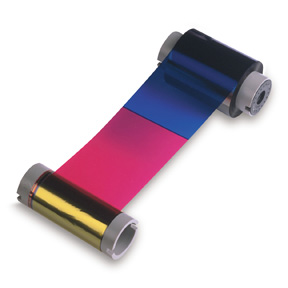
Supplies. Ribbons, blank and pre-printed cards, laminates, cleaning kits, holders, lanyards and reels — supplied on a standing schedule so reordering isn’t something you have to remember.
Frequently Asked Questions
Can our ID badges also open doors?
Yes, and that’s usually the right design. One credential identifies the person and controls their access, so issuing and revoking happen in a single step. See access control.
Can you print cards for us without us buying a system?
Yes — we produce cards from our office on an as-needed basis, which suits most smaller organizations.
Can you work with our existing printer?
Often, yes. We supply consumables for common commercial ID printers and can service or replace equipment as required. [CONFIRM]
How do we handle lost badges?
Deactivate the credential immediately in your access system and issue a replacement. This is precisely why badge-plus-credential programs beat mechanical keys — no rekeying, no locksmith.
Can badges expire automatically for contractors and visitors?
Yes. Time-limited credentials in the access system, and self-expiring visitor badges that visibly change after a set period. [CONFIRM]
One accountable provider, from planning to response.
Free, no-obligation consultations across Nova Scotia, New Brunswick and PEI.
Request a Free Consultation