
Security System Service, Repair & Maintenance in Halifax and Atlantic Canada
Repairs, maintenance and upgrades for commercial cameras, access control and alarm systems, including systems we didn't install.
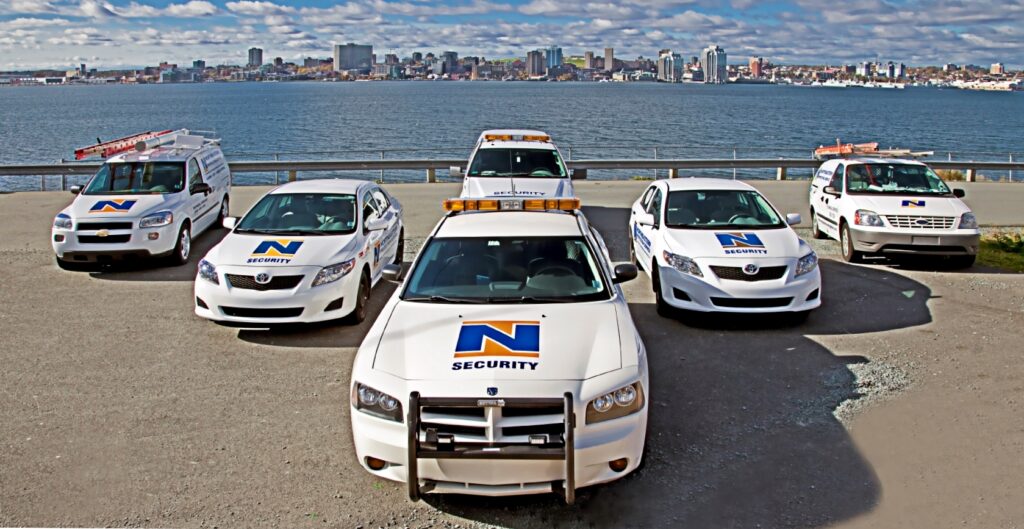
Cameras that stopped recording. Doors that stopped reading fobs. An alarm panel beeping since March. Security systems fail quietly — and are usually discovered the day footage is needed. Northeastern services, repairs and maintains commercial security systems across Nova Scotia, New Brunswick and PEI. Our technicians are trained on all major brands of CCTV and access control on today’s market, and we regularly take over systems installed by companies that have disappeared, been acquired, or stopped calling back.
What We Service
- Camera systems: cameras not recording, playback failures, storage sizing, failed cameras, cabling faults, firmware and cybersecurity updates.
- Access control: reader and controller failures, door hardware (strikes, maglocks, closers), software upgrades, database cleanups, expanding to new doors.
- Intrusion alarms: panel faults, sensor replacement, communication path upgrades (POTS-to-cellular), monitoring takeover.
- Upgrades and migrations: analog-to-IP camera conversion, end-of-life platform migrations, integrating separate systems into one.
The Failure Modes We See Every Week
After four decades of service calls, the same problems repeat, and knowing them is half of prevention. Cameras that record nothing: the NVR quietly stopped writing to a failed drive months ago and nobody checked until footage was needed — drive health monitoring and scheduled verification prevent it. Door hardware out of alignment: buildings settle and doors sag; a maglock or strike that no longer seats generates phantom “door forced” alarms until users prop the door open and defeat the system entirely. Battery fade: every panel and every UPS has batteries with a service life; dead batteries turn a two-hour power blip into a down system. Firmware neglect: recorders and cameras are computers, and unpatched ones are how “security systems” become the least secure thing on the network. Orphaned databases: years of departed employees still holding valid credentials because offboarding never touched the access system. A maintenance agreement exists to catch all five before they cost you anything.
The Systems Nobody Tested Until They Needed Them
The pattern behind nearly every emergency call: the system was never verified between installation and the incident. Security equipment fails silently — there’s no warning light on a camera that stopped recording three months ago, and the failure is discovered on the worst possible day, by someone asking for footage.
Two things make this preventable. First, the failures are predictable: drives, batteries, door hardware alignment, and communication paths account for most of them, and all four are checkable on a schedule. Second, checking is cheap relative to the loss — a scheduled visit costs a fraction of one insurance claim denied for lack of footage, or one door that has been silently unlocked since spring.
The organizations that never have this problem share one habit: someone owns the systems. Not as a full-time job — as a named responsibility with a calendar entry. If nobody in your organization owns it, that’s the strongest argument for an agreement, because the schedule then belongs to us.
Maintenance Agreements
For facilities that can’t afford surprise failures, a maintenance agreement provides scheduled inspections (cameras verified recording, doors tested, batteries replaced, firmware patched), priority response when something breaks, documented system health reports for insurers and auditors, and preferred labour rates. Property managers with multiple sites consolidate everything under one agreement and one number to call. [CONFIRM: agreement tiers and response-time commitments]
What a Service Visit Includes
Whether it’s a scheduled inspection or a repair call, the work is documented the same way: what was found, what was done, what was replaced, and what’s trending toward failure. Scheduled visits cover camera-by-camera video verification (recording, focus, view unchanged, IR functioning), door-by-door access tests (read, release, close, relock, request-to-exit), alarm walk-tests with the monitoring station, battery checks and replacement on schedule, firmware review, and a written system-health report you can hand to an insurer or auditor. Repair calls close with the same documentation, so your file shows the system’s history — which matters at claim time, and matters more at renewal time. [CONFIRM: report format/SLA details]
Inheriting a System You Didn't Buy
A large share of our service work starts the same way: someone has become responsible for a building and its security systems, and has no documentation, no passwords, and no idea who installed what. New facility managers, new owners, and property managers taking over a portfolio all land in the same spot.
What we do first is inventory. What equipment exists, where it is, what condition it’s in, what still works, what’s end-of-life, and what’s connected to what. That alone resolves most of the anxiety, because the unknown is usually worse than the reality.
Then we deal with control. Administrative credentials are frequently held by a previous installer or a departed employee, and regaining control of your own system is a real task — occasionally requiring equipment reset when the previous vendor won’t cooperate. It’s routine work for us; we’ve done it many times.
Then documentation you keep: a written record of the system, its administrators, its monitoring arrangements and its service history. If you ever change providers again — including away from us — that document travels with the building. Clients being locked into vendors by deliberate opacity is a habit in this industry that we don’t participate in.
Orphaned System? We Adopt It.
If your installer is gone or unresponsive, you’re not stuck. We assess the system as-found, document it, restore what’s worth restoring and give you a straight answer about what isn’t — with a path forward that doesn’t automatically mean ripping everything out.
When Repair Is Wrong and Replacement Is Right
We will tell you when not to spend money on an old system — and when to stop putting money into one. The honest heuristics we use: if the platform is end-of-life and parts are salvage-only, every repair is rented time; if failures are recurring on the head end (recorder, panel) rather than field devices, the economics have flipped; if the system can’t meet a new requirement — insurer-mandated monitoring, a needed integration, retention rules — patching around it costs more than migrating. What usually survives a replacement: cabling, door hardware, mounts, sometimes cameras. That’s routinely a third or more of the original install cost that a takeover-friendly vendor preserves and a rip-and-replace vendor bills you for again. [CONFIRM: reuse estimate]
Budgeting for Security Systems Over Their Life
Security systems are usually budgeted as a one-time capital purchase and then behave like an operating cost, which is why so many end up neglected. A more realistic picture over a typical life cycle:
Years 1–2: warranty period, minimal cost beyond monitoring. This is when to establish the maintenance habit, not after problems start.
Years 3–5: batteries reach end of life, the first cameras fail, door hardware needs adjustment, firmware needs attention. Modest, predictable, and much cheaper when scheduled rather than emergency.
Years 5–8: recording capacity often needs expansion as retention requirements grow; some cameras get upgraded; access software may need a version migration. This is where a maintenance relationship pays for itself, because upgrades happen incrementally rather than as a crisis purchase.
Years 8+: platform end-of-life decisions arrive. Sites that maintained their systems typically replace head-end equipment and keep cabling, mounts and door hardware. Sites that didn’t usually replace everything.
The practical takeaway: budget a small annual figure for maintenance from day one, and the large replacement number arrives later, smaller, and on your schedule rather than on the day something fails. [CONFIRM: comfort level publishing a typical annual maintenance figure as a percentage of system cost]
One caution on the financing side. Equipment leases and bundled “free system” offers move the capital cost into a monthly figure, which can genuinely help cash flow — but read what the payment covers and what it does not. Service and monitoring are frequently separate obligations with separate terms, and the lease can outlive the equipment’s useful life, leaving you paying for a system that is already end-of-life and unsupported. If a proposal quotes only a monthly number, ask for the total cost over the full term, the ownership position at the end, and which line items are service versus finance. That applies to any vendor, ourselves included.
Frequently Asked Questions
Do you service systems you didn’t install?
Yes — this is a core part of our business. All major commercial brands.
How fast can you respond to a failure?
Service calls are dispatched from Dartmouth; maintenance agreement clients get priority scheduling. [CONFIRM: stated response window]
Our system is old — repair or replace?
We’ll tell you honestly. Often the cabling and door hardware are reusable even when head-end equipment isn’t, which substantially cuts replacement cost.
Can you combine service for cameras, doors and alarms under one contract?
Yes — one agreement, one invoice, one accountable vendor.
Do maintenance agreements have a term or minimum?
Agreements run annually with straightforward terms — no evergreen lock-ins buried in fine print. Multi-site portfolios consolidate under one agreement and one renewal date. [CONFIRM: term details]
Can you maintain systems at multiple locations across the Maritimes?
Yes — one agreement, one contact, with service dispatched from Dartmouth and scheduled routes for NB and PEI sites.
Our cameras work but the image looks worse than it used to. Worth a call?
Yes, and it’s usually cheap: dirty domes, spider webs over IR illuminators, focus drift and failing IR are the common causes — all service-visit fixes, none requiring new cameras.
Get your system back to working order.
Call 902-435-1336 or book a service visit.
One accountable provider, from planning to response.
Free, no-obligation consultations across Nova Scotia, New Brunswick and PEI.
Request a Free Consultation